
read the article

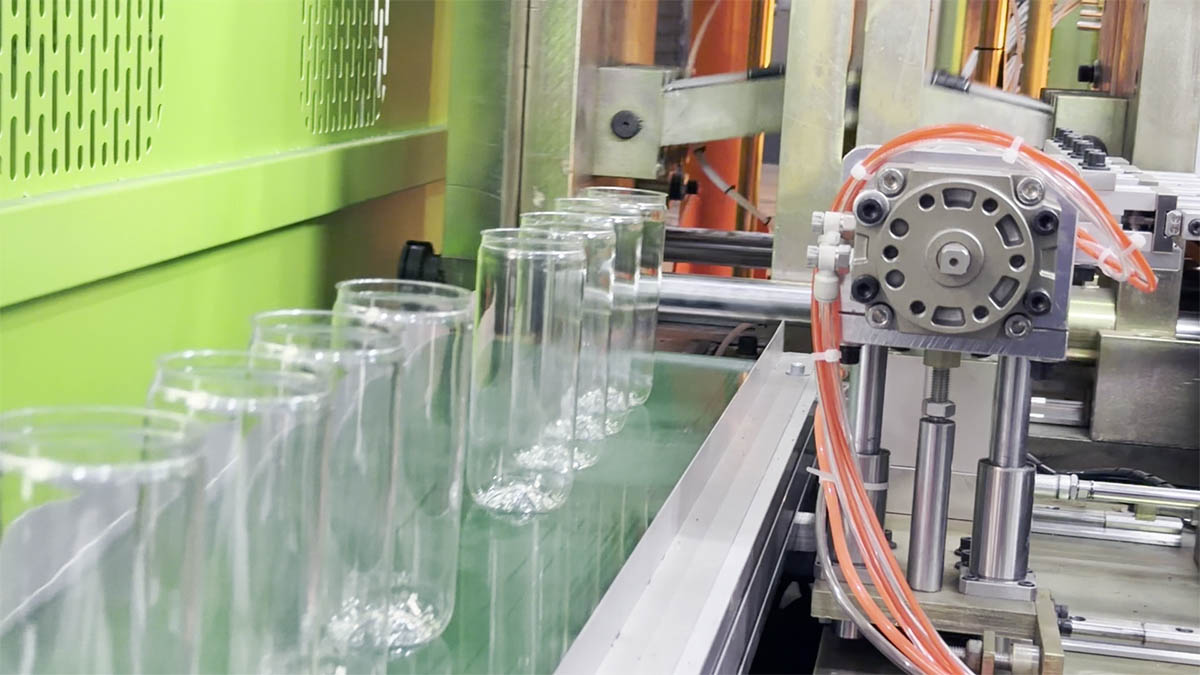
How Infrared Heating Oven Optimization Reduces Preform Heating Power Consumption in PET Blow Molding
Executive Summary & Quick Insights
In PET stretch blow molding, preform heating accounts for up to 60%–70% of total electrical energy consumption. Optimizing the infrared (IR) heating oven through precise wavelength matching, targeted reflector geometry, zone-specific temperature regulation, and intelligent airflow ventilation can reduce heating power consumption by 20% to 35% without compromising bottle quality or cycle speed. As a dedicated manufacturer, TAIXIANG MACHINE integrates high-efficiency IR heating technology into our PET blow molding machines to deliver ultra-low energy footprint solutions.
1. The Energy Challenge in PET Stretch Blow Molding
Plastic packaging manufacturers globally face dual pressures: escalating electricity costs and stringent carbon-reduction regulations. In a standard two-step PET stretch blow molding process, the preform must be uniformly heated above its glass transition temperature (approximately 90°C to 115°C) before rapid stretching and high-pressure blowing.
Because PET resin has high thermal resistance and relatively low thermal conductivity, traditional infrared ovens often rely on brute-force electrical heating. This approach leads to massive energy loss via radiant dispersion, heat dissipation, and inefficient absorption, resulting in bloated utility bills and high operational expenditure (OPEX).
2. Technical Strategies for IR Heating Oven Optimization
At TAIXIANG MACHINE, our engineering team focuses on five core thermal performance vectors to achieve optimized energy utilization during preform conditioning:
A. Wavelength Matching (NIR vs. Traditional FIR)
Standard infrared heaters radiate broad-spectrum long-wave heat, which mainly cooks the preform surface while leaving the core cold, requiring excessive heating time. By implementing optimized Near-Infrared (NIR) or Short-Wave IR lamps, the light energy matches the natural absorption spectrum of Polyethylene Terephthalate (PET). This allows heat energy to penetrate directly into the preform sidewall core, accelerating penetration and drastically cutting kilowatt usage.
B. Precision Reflector Materials & Chamber Geometry
Uncontained thermal radiation quickly dissipates into the ambient environment. Modern oven designs utilize high-reflectivity ceramic or pure gold-coated aluminum reflectors behind the heating lamps. These specialized reflectors bounce back up to 95% of scattered radiant light onto the preform body, minimizing thermal waste.
C. Multi-Zone Independent PID Temperature Control
Different sections of a preform require different thermal profiles—the neck finish must remain cool to prevent distortion, while the body and base require precise axial heat distribution. Microprocessor-controlled multi-zone oven systems allow operators to fine-tune individual heating lamp power levels dynamically. Delivering energy only where needed prevents over-heating and power wastage.
D. Internal Air Ventilation and Cooling Balance
Excessive surface heat can cause preform crystallization (hazing). Optimized ovens incorporate controlled cooling air circulation that removes heat from the preform surface while allowing deeper IR penetration. Efficient convection balancing lowers required IR lamp power draw while preserving optical clarity.
E. Pitch-Optimized Preform Spacing
Reducing the distance (pitch) between adjacent preform mandrels inside the heating tunnel minimizes dead spaces between lamps. A tighter heating pitch ensures that almost 100% of the radiated IR rays hit a preform surface rather than empty air.
3. Performance Benchmark: Standard vs. Optimized IR Oven
The table below highlights performance metrics based on long-term testing conducted on TAIXIANG MACHINE high-efficiency automatic PET blow molding equipment:
| Performance Parameter | Conventional IR Oven | TAIXIANG Optimized IR Oven | Energy Efficiency Gain |
|---|---|---|---|
| Average Heating Power (kW) | 45 kW - 60 kW | 30 kW - 40 kW | 25% - 30% Savings |
| Thermal Loss to Ambient Environment | High (> 35%) | Minimal (< 12%) | Up to 23% Reduction |
| Warm-up / Pre-heat Time | 15 - 20 minutes | 5 - 8 minutes | > 50% Faster Startup |
| Preform Temperature Uniformity | ± 3.5°C | ± 0.8°C | Enhanced Scrap-rate Reduction |
4. Why Choose TAIXIANG MACHINE as Your Turnkey PET Solution Partner
As an industry-recognized factory specializing in high-performance PET blow molding machines, injection molds, and auxiliary systems, TAIXIANG MACHINE provides comprehensive engineering solutions tailored to bottle manufacturers, beverage bottlers, and packaging suppliers worldwide.
Our energy-saving PET blow molding series features built-in smart IR oven modules, user-friendly PLC touch control, fast mold-change mechanisms, and stable high-pressure pneumatic systems. Whether producing mineral water bottles, carbonated soft drink (CSD) containers, hot-fill juice bottles, edible oil jugs, or cosmetics jars, TAIXIANG machinery delivers high productivity, low TCO (Total Cost of Ownership), and rapid ROI.
5. Frequently Asked Questions (FAQ)
Q1: How much electricity can be saved by upgrading an IR oven in a PET blow molding machine?
A: Depending on the bottle specification and initial machine baseline, an optimized IR heating oven system reduces overall heating electricity consumption by 20% to 35%. This directly lowers per-bottle manufacturing costs.
Q2: Does heating oven optimization affect bottle quality or blow molding speed?
A: On the contrary, precise thermal conditioning improves material distribution (stretch ratio consistency), enhances bottle strength, reduces haze/crystallization, and allows faster, more consistent blowing cycles.
Q3: What customized PET blowing solutions does TAIXIANG MACHINE offer?
A: TAIXIANG MACHINE provides full-line solutions ranging from fully automatic high-speed linear PET bottle blowing machines and semi-automatic units to custom preform/bottle molds and energy-recovery auxiliary devices.
Conclusion
Optimizing the infrared heating oven is no longer just an optional tweak—it is a competitive necessity for plastic container manufacturers aiming to optimize power consumption. By combining smart NIR technology, modular oven design, and accurate thermal profiling, TAIXIANG MACHINE empowers global clients to achieve sustainable production and maximum profitability.